Ancient Greece Dance Styles and Characteristics
Ancient Greece was famous for many things. From singing, painting, sculpting, and more, they were masters in the arts. Dancing has been a part of ancient Greek culture since 1500 BCE. Dance has a very important role in Greek Culture.
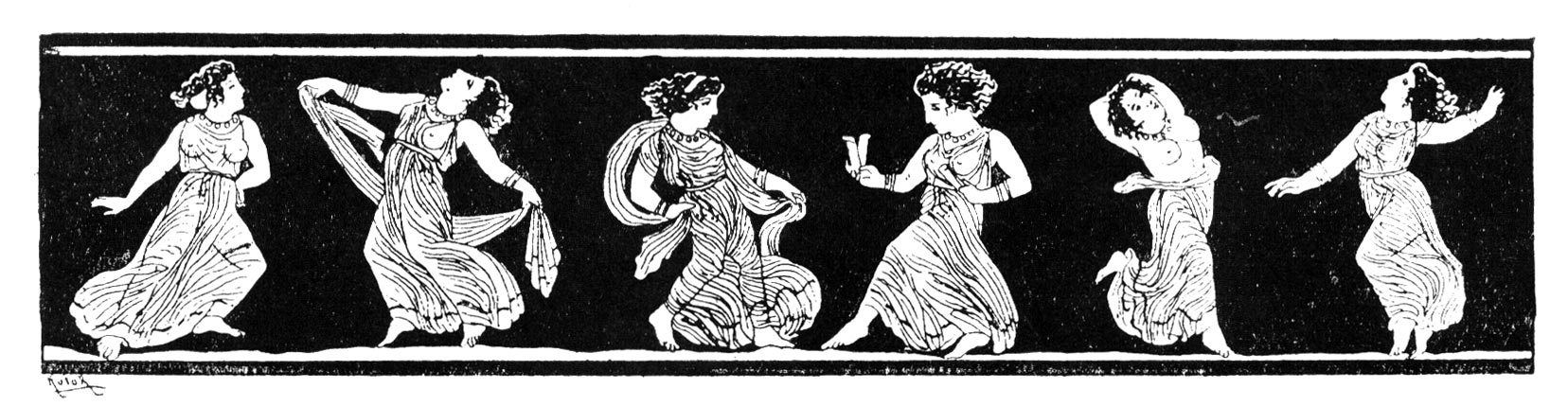
There are two distinct characteristics when it comes to traditional Greek dance. *The springing/leaping dance. *The shuffle/dragging dance. Most dances are in circles in which the dancers are linked together by holding hands, wrists, or shoulders. Female dances are slower and more dignified while men's dances often protrayed their manhood.
There are around four thousand traditional different styles of ancient Greek dance.
Phyrrihic or Korybantes: This dance is the dance in armor. The "pyrrhic dance" or pyrriche was a male coming-of-age initiation ritual and was part of a warrior victory celebration. The Pyrrhic dance was performed in various ways at various times and in various countries. Plato describes it as representing by rapid movements of the body the way in which missiles and blows from weapons were avoided, and also the mode in which the enemy were attacked.
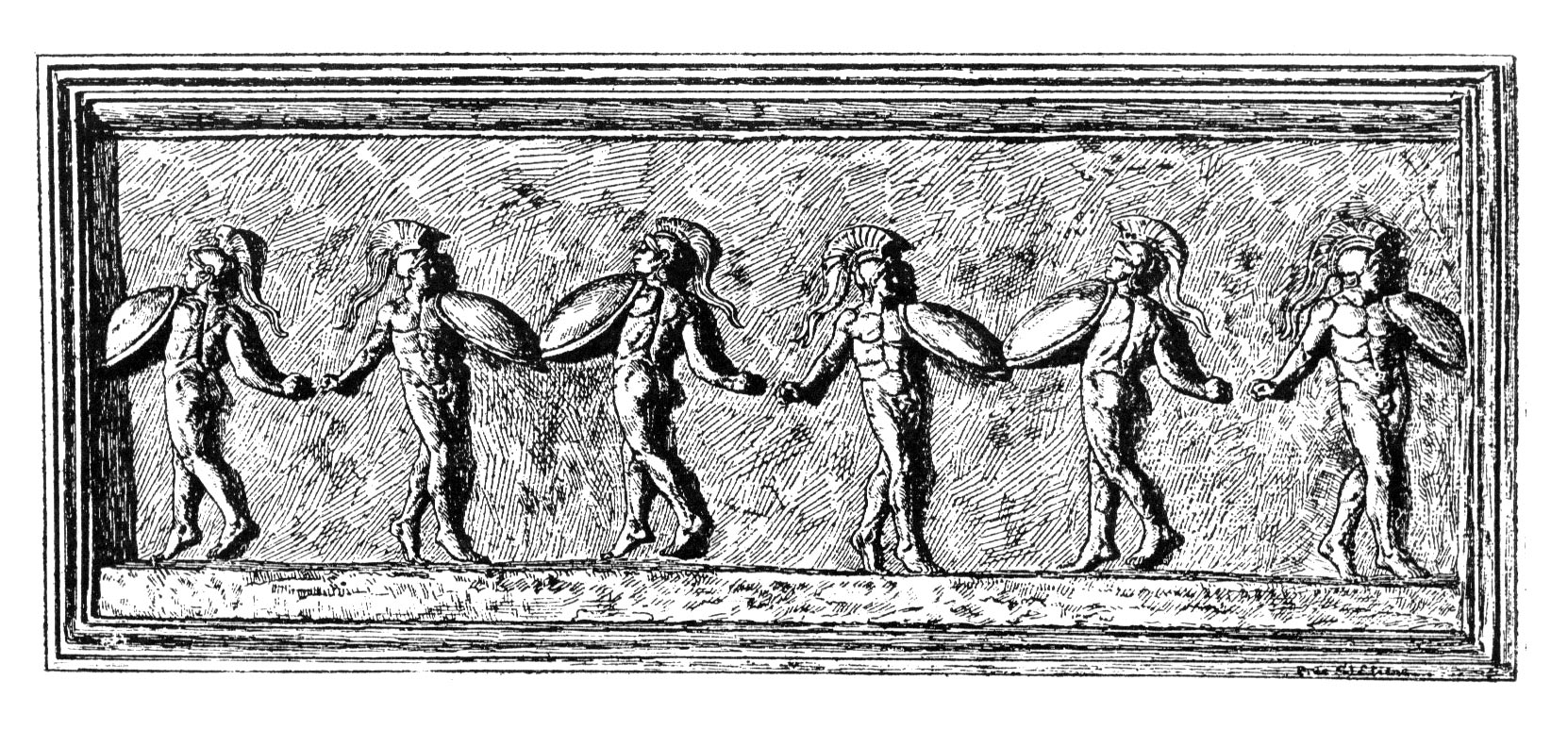
Corybantum: This dance is a military dance, were the dancers are in armor, had swords and sheilds and exclaimed fury. It was usually accompanied by the flute.
Bacchanalian: This dance is the featured dance at the Dionysian festival. It featured music by a double flute played in the Phrygian mode of music. This dance involves a lot of movement and improvisation.
Geronos or Chain Dance: Usually, in Greek dances, men and woman did not mix during dance, with exception for the Chain pr Geronos Dance. Usually it is the youth who dance in this dance. Here, the Greek author, Homer, describes the dance: "Here young men and the most desired young girls were dancing, linked, touching each other’s wrists, the girls in linen, in soft gowns... Trained and adept, they circled there with ease, the way a potter sitting at his wheel will give it a practce twirl between his palms to see it run; or else, again, in lines as though in ranks, they moved on one another: Magical."